
Remix 4: AI, Art, and Speculative FuturesMoving from critique to proposition

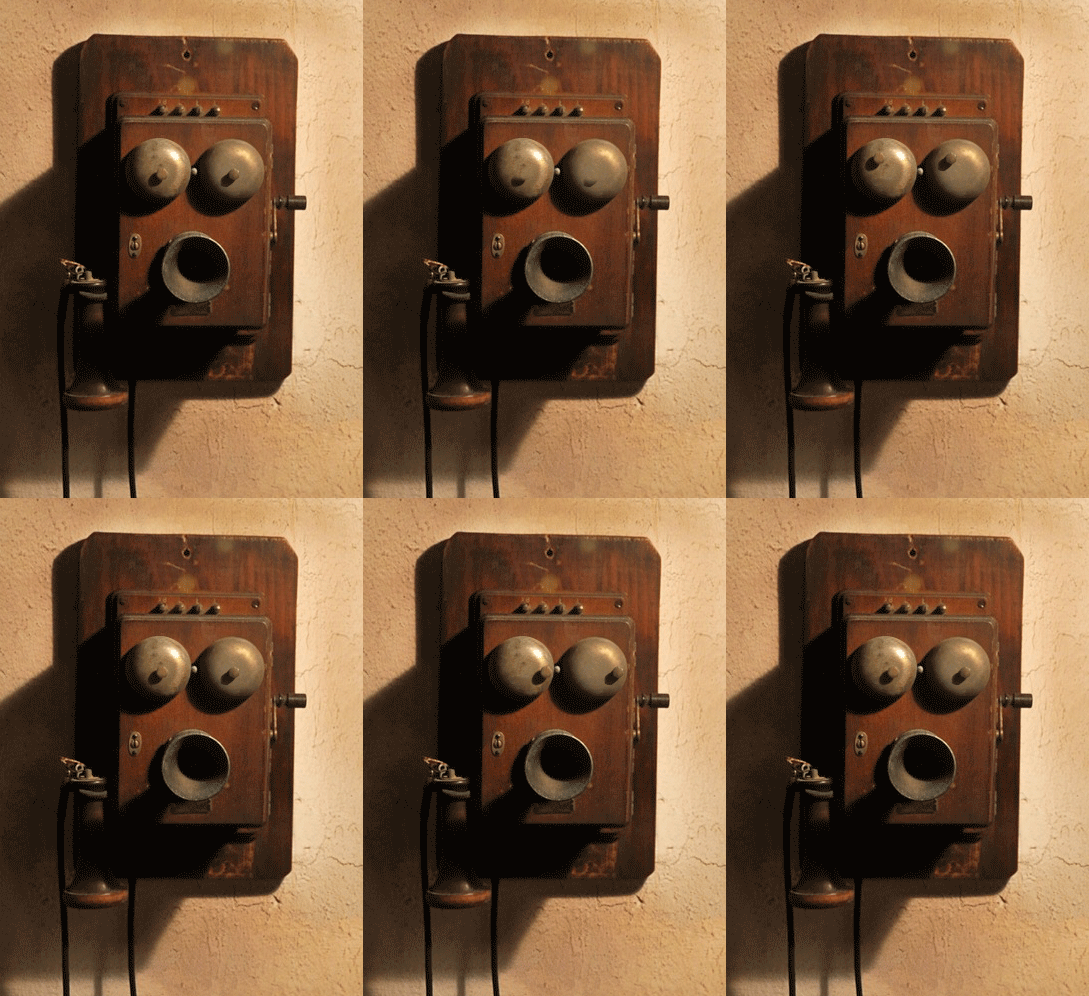
A lot of things that feel ordinary now would have sounded ridiculous to someone living a century ago. We carry devices that let us see and speak to someone on the other side of the planet. We talk to machines and expect an answer. A watch can receive a phone call.
Before many of these experiences became ordinary, versions of them existed in stories.
Science fiction gives us a place to imagine what life could become before we know how to make it happen. Sometimes a story anticipates a technology. Sometimes an inventor actually credits fiction as an influence. Those are different kinds of connections, and both are useful to us.
You cannot deliberately work toward a future you cannot imagine. Giving an idea room to stretch is one way to discover a direction you could not see from where you started.
The Star Trek communicator is an obvious visual parallel to the mobile phone, especially a flip phone. It makes portable communication look like an ordinary part of daily life.
But here is a useful detail: Martin Cooper, who led Motorola's handheld cellular phone team, says the fictional influence on his thinking was Dick Tracy. That comic gave its detective a wrist radio, and later wrist television. A story gave people an image of what personal communication could look like.
Here is a short passage from The Machine Stops by E.M. Forster:
“presently she could see the image of her son, who lived on the other side of the earth, and he could see her.”

In 1909, E. M. Forster imagined in a fictional sotry called "The Machine Stops" a woman holding a small screen and speaking to her son on the other side of the earth. People in this world attend lectures remotely and rely on a vast technological system to meet their needs.
That sounds familiar. Forster's story also asks what we lose when our relationships are mediated by a system we become dependent on. He imagined both an experience resembling modern video calling and a social problem that could come with it.
Jules Verne's Twenty Thousand Leagues Under the Sea offers a different connection. Submarines already existed, so we should not say Verne invented the idea. But his fictional underwater world inspired an actual submarine designer, Simon Lake. The Smithsonian documents that reading Verne as a young person first sparked Lake's interest in submarines. His Argonaut I launched in 1897.
A story helped someone imagine a life he wanted to pursue. He then had to learn, experiment, build, and solve real engineering problems.
Ray Bradbury's The Veldt gives us another recognizable future: an automated home and a room that creates immersive environments in response to the children's thoughts. The room goes far beyond what we can build today, but its questions about convenience, generated experiences, and outsourcing care feel very current. Those are parallels we can draw, rather than evidence that Bradbury caused today's technologies.
What interests me is that fiction can make room for an experience before we have the tools to deliver it. The storyteller can ask, “What would happen if this existed?” without first proving that it can be manufactured.
That freedom is something we can borrow for our soulution oriented, speculative conclusions in our research papers.
Thinking practically is useful. We need it to build things, assess consequences, and decide what to try. But if the first response to every idea is “That would never work,” we can shut down an idea before we understand what it offers.
Sometimes we mistake the way something currently works for the only way it could work.
Consider a child who is frightened of a medical scan. We could start by asking how to make the child tolerate the procedure. Designer Doug Dietz and his collaborators explored how the experience itself could change.
GE's Adventure Series uses themed rooms, characters, and activities. A scanner can become part of a pirate adventure. A real hospital installation described by GE transformed a CT scanner and its room into a pirate ship.
I would describe the imaginative shift this way: what if the child could enter a story in which this frightening experience made sense?
The ship is fictional. The room, the scan, and the child's experience are real. Storytelling becomes part of the design of a response.
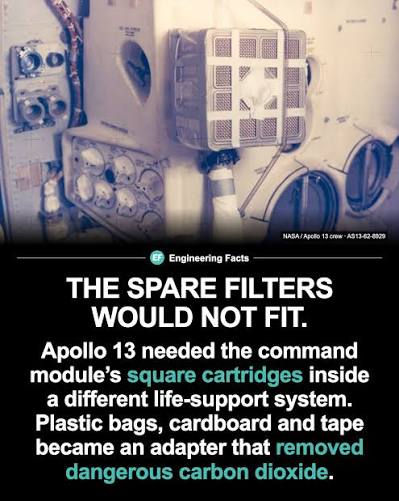
We can also rethink what an existing object is allowed to do. During Apollo 13, NASA needed to adapt square carbon-dioxide-removal canisters to a system with round openings. Engineers devised an adapter using materials available onboard, including plastic bags, cardboard, and tape, and tested it before sending instructions to the crew.
That was engineering under very real constraints. It illustrates a related habit: looking beyond an object's assigned purpose to imagine another use.
In Class Activity

For today's exercise, we are going to give ourselves more freedom than those engineers had. We will begin with a fictional world and imagine a response to its problem. We will watch an episode of The Twilight Zone that has paralels with the issues we face today, and your job is to write a new ending.
You can invent a technology. You can also invent a law, a collective agreement, an institution, a ritual, or a different way of organizing society. You can question the conditions that made the problem exist. Push your imagination as far as you can, it's fiction, anything is possible.
Then tell us what happens because of your proposal. Who benefits? Who can use it? Who controls it? What new difficulty appears?
Discussion questions:
What parallels do you see with technology today?
What change will you make with the new speculative ending: physics, money, law, ownership, custom, belief, or something else?
Will your new ending require another machine, or another relationship?
Whose point of view would change the ending?
What part of the ending is worth keeping even if its technology never becomes possible?
Applying the exercise to the research paper:
This connects directly to the speculative solutions section of your research paper.
Your research should establish the real problem: what is happening, what evidence supports your account, who is affected, and what is at stake. Then you can use fiction to stretch your response beyond what seems immediately available.
Imagine your proposal already exists. Show us someone living with it.
If your paper concerns artists' control over the use of their work, perhaps you imagine artworks with living permission systems. Every artwork has a robot representative that can negotiate, refuse a use, or recall a license. That is a fictional premise.
Now follow it. What happens when someone ignores the refusal? Who controls the representative? What happens when artists disagree with their own representatives?
Even if the complete invention remains impossible, the story may reveal a principle worth pursuing: continuing consent, collective bargaining, meaningful refusal, or a different distribution of power.
That is the move from critique to proposition.
You identify something that needs to change, then give us a possibility we can examine.
After imagining, return to your evidence. Explain how the proposal responds to the problem you researched. Identify what you invented, what remains uncertain, and what part might be worth exploring now.
You do not have to prove that your entire imagined future can be built today. You do need to show us why it matters.
Keep the researched problem and the invented proposal visibly distinct. You can include a short future scene within your speculative solutions section and then analyze it.
Establish the problem using research.
Name a condition you want to imagine changing.
Write a brief scene showing your proposed response in use.
Explain how the response addresses the researched problem.
Identify a tradeoff or new problem, and an idea that might be pursued now.
For example, a future artwork's permission representative is invented. Its ability to negotiate continuing consent is the principle you can examine. The story does not establish evidence that this system exists or would be effective. It just proposes it as a speculative future that is worth considering.

Historical framing
These examples establish anticipation, resemblance, or documented influence. They do not establish the earliest-ever appearance of every technological idea. We are not saying “fiction invented the smartphone,” “Verne invented submarines,” and “Forster invented the internet.” Fiction and engineering can inform one another; real implementation requires research, infrastructure, resources, and testing.
Comments